Disabled cyclists: How to make hospitals more welcoming
A report on my project to improve Disabled cyclists’ access to Cambridge University Hospitals (CUH)
Key Findings
My work on this project coincided with decreased access to CUH during May 2026 due to a number of roadworks. The roadworks especially impeded access for Disabled cyclists from the Eastern approach to the hospitals, with two cycle lanes closed. This coincided with the closure of the path from Trumpington Park and Ride and Railway Station for the erection of safety fencing. CUH hired coaches to take workers to and from the Park and Ride site. However, the coaches blocked the cycle lane on the other side of the road too. There was insufficient regard to the needs of Disabled cyclists in the coordination of these roadworks.
I found evidence that Disabled cyclists have difficulties opening the heavy secure cycle shed doors. They have complained of other cyclists blocking access to their cycle in the shed. They had to create a laminated sign asking other cyclists to be more considerate.
There are cycle signs around the hospital site that are confusing. For instance, there is a sign on a cycle shed banning the storage of e-bikes there.
Some hospital staff lacked awareness of how beneficial inclusive cycles can be for rehabilitation. Also, how they can fit into the hospitals’ Green Plan and the NHS 10 Year Health Plan Fit for the Future.
According to the 2021 Wheels for Wellbeing (WfW) survey, 64% of Disabled people found cycling easier than walking. 60% of disabled people in the survey used a standard two-wheeled bike. Two-wheeled bikes are cheap and easy to store, unlike inclusive cycles. So, there will be cyclists on the hospital campus that have a hidden disability.
Actions Taken to improve access for Disabled Cyclists
I did a case study on the impact of the roadworks and the path closure. Councils have some control on the timing of roadworks. So, I forwarded my findings to the Chair of the council’s Highways and Transport committee. WfW are a campaigning organisation that have expertise in how roadworks planners can better accommodate Disabled wheelers/cyclists. I included WfW’s guidance in my advice to the Chair.
In my case study, I shared the Disabled cyclist’s report about the heavy cycle shed doors.
I asked the hospital Fire Safety team to remove the sign banning e-bikes from one of the cycle sheds. I know they put this sign up due to their concerns about reports of explosive lithium-ion e-bike battery fires.
In my case study, I advised the Fire Safety team that this sign is a breach of the Equality Act (2010). Many Disabled cyclists ride e-bikes. However, there was no guidance on the sign as to where equitable e-bike parking is on the hospital site. Some Disabled cyclists may have thought that e-bikes are banned on the hospital site. WfW advise that government should improve legislation to reduce the risk of consumers buying unsafe lithium-ion batteries.
Also in my case study, I stated that inclusive cycles are a natural fit into the Trust’s Green Plan. Also that the NHS 10 Year Health Plan Fit for the Future has a focus on Preventative care. My aim was to persuade the hospital to be more accommodating for a Physiotherapy pilot programme using Bikeworks’ inclusive cycles.
Early Impact
There were 24 visits to my online case study report after I posted a link to it in the CUH Staff Facebook group according to Google Analytics:
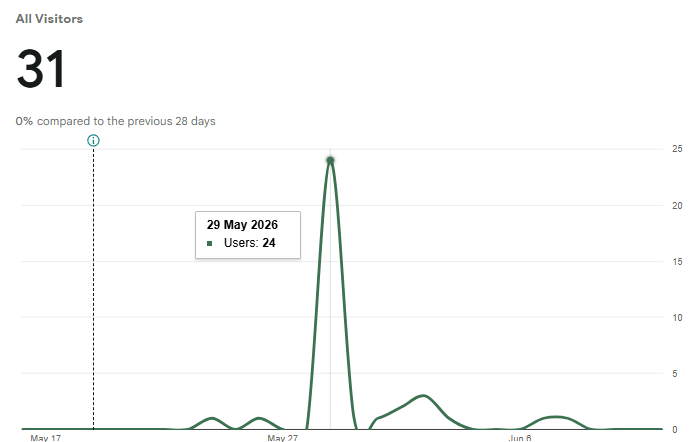
While this is good engagement in the terms of visitor numbers, there were no visitor comments on Facebook or on the case study webpage. There has been no response from the Chair of the Council’s Transport & Highways Committee. This is positive in terms of there being no negative response. However, it does suggest that the response to the case study is passive.
Next Steps to improve access for Disabled Cyclists
I will do a blog post to show the range of Inclusive cycles that Bikeworks CIC can use in their pilot with the Physiotherapy team. This will be a good way for me to reinforce the message that the hospital can use inclusive cycles to help meet their Net Zero commitment in the Green Plan. The hospitals can also use inclusive cycles as part of the preventative care focus in the NHS Long Term Plan.
Inclusive Cycling organisations have provision for people with Learning Disabilities and Autism who want to experience riding a cycle. So, I will also advise the hospitals that by providing inclusive cycles for patients with Learning Disabilities that this will fit into their requirement to reduce health inequalities for cohort of patients.
Patients with Mental Health conditions also benefit from inclusive cycling
WfW reported in the 5th edition of their Guide to Inclusive Cycling that 24% of the UK population reported that they have a disability in the 2024 to 2025 Department of Work and Pensions (DWP) Family Resources Survey. According to a 2025 House of Commons Library research briefing on UK Disability statistics, there has been an increase in mental health conditions reported among children and working-age adults. (In 2002 to 2003, only 18% of the UK population reported having a Disability.)
The main focus of my project so far has been to show the benefits of inclusive cycles for physically Disabled people. I now intend to show that people with mental health conditions can also experience great joy riding a cycle. Like Learning Disabilities, Mental Health is one of the domains which hospitals have to annually report on how they are reducing health inequalities. So, a hospital programme to prescribe cycling to patients with mental health conditions could be a good way of doing this.